Showing posts with label Robotics. Show all posts
Showing posts with label Robotics. Show all posts
Monday, May 21, 2018


Friday, November 20, 2015
Best Buy's bet: Drones will sell well for the holidays
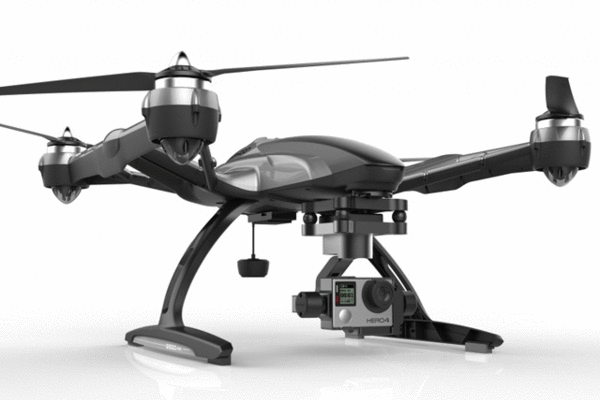
Best Buy is betting that drones will be a hit for holiday shoppers along with wearables and connected devices.
The company outlined where it thinks the technology ball is going as it reported its third quarter results. The company reported third quarter earnings of 37 cents a share on revenue of $8.82 billion, down from $9.03 billion a year ago. Non-GAAP earnings were 41 cents a share. The earnings were better than expected, but sales were light as was the outlook for the fourth quarter.
Best Buy's results are worth watching in the volatile retail sector because it's one of the few technology pure plays. While tech is expected to do better than apparel and other categories Best Buy's same store sales in the quarter were up a mere 0.5 percent. Online sales were up 18.3 percent in the third quarter, but that was off the 21.6 percent rate from a year ago.
The good news is Best Buy's comparable store tally is better than a lot of retailers. The bad news is that the quarter got tougher as it went along for retailers overall.
Meanwhile, Best Buy said the Black Friday dynamics have changed. Promotions are underway for the entire month of November. CEO Hubert Joly said it's hard to predict where demand will land in the tech space, but Best Buy outlined the following.
There was interest in drones toward the end of the quarter.
Computing, wearables and 4K televisions were in demand.
Tablets, mobile phones and digital imaging sales struggled. On the bright side, Best Buy's lower margin tablet sales fell and that helped boost gross profits.
Thursday, November 19, 2015
DARPA seeks "non-traditional" robotics innovators

overnment grants for cutting edge robotics research and development typically favor large military contractors. But a lot of the development in robotics these days comes from individuals, startups, and university labs capitalizing on developments in 3D printing and falling sensor prices. Because hardware has entered a phase of rapid iteration, the government risks missing out on cutting edge technology if it continues focusing on long-term contracts to the exclusion of short-term innovations.
Now DARPA, which funds research for national defense, wants to throw the government's money behind non-traditional robotics developers. To that end, the agency has teamed up with the Open Source Robotics Foundation (OSRF) and BIT Systems (BITS) on the Robotics Fast Track program (RFT).
"We spend too much time creating three- to four-year solutions for six-month problems," explains Mark Micire, DARPA program manager. "We want this new generation of robotics innovators to see DARPA as a partner that can help them develop breakthrough technologies in the areas that personally interest them and help translate their ideas and know-how into game-changing capabilities. We're eager to pioneer this new approach, which could lead to rapid, marked improvements in national security as a whole."
The program reflects the increasing democratization of robotics development, a fact DARPA is no doubt well aware of given its choice of OSRF as a partner. The non-profit organization oversees the open-source Robotic Operating System (ROS), which is fast becoming the community-supported standard architecture for both commercial and government-backed robotics projects.
"Most government programs don't have the reputation of being fast and innovative," says Brian Gerkey, CEO of OSRF. "But DARPA's Robotics Fast Track is just that. There are hundreds if not thousands of designers, students, makers, and engineers who have great ideas about robots. Our work with DARPA and BIT Systems will help bring these ideas to light."
One of those pioneering researchers is Dinesh Manocha, Distinguished Professor of Computer Science at the University of North Carolina, Chapel Hill. Dr. Manocha and his team are developing advanced motion and trajectory planning systems for high degree of freedom robots. One of the biggest challenges in robotics and path planning is figuring out how to enable robots to safely map and execute diverse tasks on the fly and in close proximity to people or other obstacles. They plan to integrate their technology into ROS as that provides an underlying framework to build on, which means Manocha and his team don't have to reinvent the wheel in order to innovate.
"I'm such a big fan of ROS," he tells me over the phone. "It has influenced the whole research community. If we didn't have it, I would have to do everything from scratch, which would be a nightmare."
Dr. Manocha, whose lab received Robotics Fast Track funding to support a one-year project, has long been a torch-bearer for an open source ethos that now has firm footing in the robotics community.
"We have a proud tradition of putting the modules we develop on the web for everyone to use," he tells me. "Our lab has released open source software for robotics and simulation that has been downloaded approximately 150,000 times, and is also widely used by other researchers and industry."
This week, DARPA, OSRF, and BITS are touring the west coast to drum up interest and highlight the work being done by their first grantees. True to its commitment to speed, the program, which only opened its application-cycle in May, has already issued its first awards. The program is offering grants to fund projects in six broadly defined areas of interest: space, maritime, ground, air, hardware, and software.
The west coast tour, which began in Washington State, heads to Northern California Wednesday and will be in So. Cal. Thursday. If you'd like to attend, you can find event information on OSRF's Robotics Fast Track Website.
Friday, October 16, 2015
Self-driving cars will cruise the factory floor before they're big on the open road
Clearpath Robotics, a Canadian maker of field and service robots, has a new self-driving car named OTTO. But it's not for the road. The moving platform is designed for heavy-load transport in industrial environments like factories and warehouses. Like the company's other autonomous transport solutions it uses some of the same underlying technology popularized by the Google self-driving car.
"North American manufacturers are constantly under pressure to find new ways to gain an edge against low-cost offshore competition," says Matt Rendall, CEO and Co-Founder of Clearpath Robotics. "Traditional automation is saturating. But what about the more complex tasks too difficult or expensive to automate? We created OTTO to reinvent material transport and give North American manufacturers a new edge."


"North American manufacturers are constantly under pressure to find new ways to gain an edge against low-cost offshore competition," says Matt Rendall, CEO and Co-Founder of Clearpath Robotics. "Traditional automation is saturating. But what about the more complex tasks too difficult or expensive to automate? We created OTTO to reinvent material transport and give North American manufacturers a new edge."

OTTO is part of an emerging trend in industrial robotics toward flexibility in automation. Traditional material handling systems in factories use external infrastructure, such as tracks or guide paths. That's fine for a fixed assembly line that rarely needs to be reconfigured, but most factories today handle a variety of manufacturing tasks. And thanks to Amazon, the logistics industry is also under pressure to speed up the time it takes to bring merchandise from the warehouse to your doorstep. Those realities have prompted companies like Fetch Robotics and now Clearpath to design intelligent, industry agnostic automation solutions that are easily reconfigurable. Not surprisingly, both companies use the open-source Robotic Operating System, which makes their platforms highly expandable. Know More about Fetch

OTTO, which is self-guided, can transport 3300 pound loads at speeds up to 4.5 mph. It chooses optimal paths and its sensors enable it to safely avoid collisions. Applications include moving pallets in a warehouse or delivering components or kits to workers on an assembly line. OTTO units are currently deployed in five test facilities, the first of which belongs to GE. GE Ventures has also become a strategic investor in Clearpath, though the size of its investment remains undisclosed.
"We believe robotics will drastically improve the industries that GE serves," said Ralph Taylor-Smith, Managing Director of GE Ventures, in a statement. "We look forward to further partnering with Clearpath and exploring the role large-scale service robots may play for us and for our customers in the future. This Clearpath investment from GE reflects a deepening of the industrial partnership in advanced manufacturing and field service operations with self-driving vehicles and service robots."
In addition to the GE investment, Clearpath raised $11.1M in a Series A round earlier this year.
New generation of robotics are industry-agnostic, open-source
In 1961, a robotic arm nicknamed Unimate joined the General Motors assembly line to perform basic welding tasks that were unpleasant and particularly dangerous for humans. The 4000-pound, six-axis robot ran off of magnetic tape.
"If you start with Unimate," says Melonee Wise, CEO of Fetch Robotics, an industrial robotics startup that received a $20M investment from SoftBank in June, "you see that industrial robots were developed and entered the workforce based on a very specific way of thinking."
Though subsequent robots would achieve greater dexterity, strength, and speed, Unimate served as the proto-model. For the next half century most industrial robots were caged-off behemoths that handled repeatable tasks adroitly but required costly physical reconfiguration to take on new tasks or change operating environments.
That remains the best (and only) approach to robotics for heavy manufacturing, and task-specific bots will continue to make our cars and, increasingly, electronic devices for the foreseeable future. The last five years or so, however, spurred by advances in sensing and processing and by significant shifts in consumer trends that have given rise to a thriving logistics industry, has seen a change in thinking away from task-specific industrial robots to more flexible platforms that are application- and even industry-agnostic.
Fetch Robotics, founded in 2014, represents a generation of companies developing adaptable platforms that are designed for use beyond the specific industries for which they were initially conceived. Not surprisingly, the company's approach has largely been informed by the impressive open-source robotics pedigree of Wise, who got her start at Willow Garage, developer of the now-ubiquitous open-source Robotic Operating System (ROS).
The Fetch system comprises a self-guiding robotic picker that can navigate a warehouse floor, identify products, and pick them off a shelf. Used in conjunction with Fetch's autonomous cart, nicknamed "Freight," the system can automate pick and place processes in fulfillment warehouses without requiring costly reconfiguration or setup.

"There's a 600,000 worker job gap in the logistics industry that companies can't fill today," Wise tells me. "That's only going to get worse. The biggest shift is the on-demand economy. Everyone wants what they want yesterday; they want time travel. Any way to shift your business to same day or next day delivery is to your advantage, and that takes a significant amount of manpower."
Logistics is a growing market and Fetch has been tactically smart to target it, but the striking thing about Fetch's approach is that it isn't developing its platform exclusively for order fulfillment; the move into logistics has been opportunistic.
"Longterm, Fetch robotics will be a company that makes solutions for different sectors," explains Wise.
Part of the way Fetch is ensuring that its system will outgrow its initial application is by making research models available to graduate schools and research institutions. That's a similar approach to the one Wise used at Willow Garage when she helped develop TurtleBot, an open-source mobile robotic platform that was designed to be developed into a useful system by the end users -- in essence, a blank slate.
"Both platforms, Fetch and TurtleBot, are designed to have apps written on top of them. The goal with TurtleBot was to provide an entry level platform for students to learn robots on, to get them to a point where they're not writing visualization systems but working on higher level stuff like navigation and motion planning."
When you look at the Fetch platform through the same lens, you start to see the scope of the company's ambitions. "Once we get a strong foothold in logistics, we have our platform and we can start experimenting with elder care and hospitality and other things. Where are the next places we can go with the robot? We don't have to build a new robot to make the next MVP product. That's how we're thinking. And of course the robot will evolve over time, as all robots do, with new tech, new sensors."
The new growth in industrial robotics market, which is set to grow to $44.45B in sales by 2020, will be driven not by companies that make quality robots for different sectors, but by companies making highly flexible robots that empower outside developers to experiment and adapt systems to new industries. "Look, if someone wanted to develop a business out of developing applications for our robots, we'd absolutely sell them our robot," says Wise.
"If you start with Unimate," says Melonee Wise, CEO of Fetch Robotics, an industrial robotics startup that received a $20M investment from SoftBank in June, "you see that industrial robots were developed and entered the workforce based on a very specific way of thinking."
 |
| Fetch and CEO Melonee Wise |
That remains the best (and only) approach to robotics for heavy manufacturing, and task-specific bots will continue to make our cars and, increasingly, electronic devices for the foreseeable future. The last five years or so, however, spurred by advances in sensing and processing and by significant shifts in consumer trends that have given rise to a thriving logistics industry, has seen a change in thinking away from task-specific industrial robots to more flexible platforms that are application- and even industry-agnostic.
Fetch Robotics, founded in 2014, represents a generation of companies developing adaptable platforms that are designed for use beyond the specific industries for which they were initially conceived. Not surprisingly, the company's approach has largely been informed by the impressive open-source robotics pedigree of Wise, who got her start at Willow Garage, developer of the now-ubiquitous open-source Robotic Operating System (ROS).
The Fetch system comprises a self-guiding robotic picker that can navigate a warehouse floor, identify products, and pick them off a shelf. Used in conjunction with Fetch's autonomous cart, nicknamed "Freight," the system can automate pick and place processes in fulfillment warehouses without requiring costly reconfiguration or setup.

"There's a 600,000 worker job gap in the logistics industry that companies can't fill today," Wise tells me. "That's only going to get worse. The biggest shift is the on-demand economy. Everyone wants what they want yesterday; they want time travel. Any way to shift your business to same day or next day delivery is to your advantage, and that takes a significant amount of manpower."
Logistics is a growing market and Fetch has been tactically smart to target it, but the striking thing about Fetch's approach is that it isn't developing its platform exclusively for order fulfillment; the move into logistics has been opportunistic.
"Longterm, Fetch robotics will be a company that makes solutions for different sectors," explains Wise.
Part of the way Fetch is ensuring that its system will outgrow its initial application is by making research models available to graduate schools and research institutions. That's a similar approach to the one Wise used at Willow Garage when she helped develop TurtleBot, an open-source mobile robotic platform that was designed to be developed into a useful system by the end users -- in essence, a blank slate.
"Both platforms, Fetch and TurtleBot, are designed to have apps written on top of them. The goal with TurtleBot was to provide an entry level platform for students to learn robots on, to get them to a point where they're not writing visualization systems but working on higher level stuff like navigation and motion planning."
When you look at the Fetch platform through the same lens, you start to see the scope of the company's ambitions. "Once we get a strong foothold in logistics, we have our platform and we can start experimenting with elder care and hospitality and other things. Where are the next places we can go with the robot? We don't have to build a new robot to make the next MVP product. That's how we're thinking. And of course the robot will evolve over time, as all robots do, with new tech, new sensors."
The new growth in industrial robotics market, which is set to grow to $44.45B in sales by 2020, will be driven not by companies that make quality robots for different sectors, but by companies making highly flexible robots that empower outside developers to experiment and adapt systems to new industries. "Look, if someone wanted to develop a business out of developing applications for our robots, we'd absolutely sell them our robot," says Wise.
Subscribe to:
Posts (Atom)
How to Use an Android device as Second Monitor for your PC or MAC
How to Use an Android device as Second Monitor for your PC or MAC!! 💠 The method is quite simple and easy and you just need to follow...

-
Xiaomi Redmi 6, Redmi 6A launch with Face Unlock and 18:9 display Chinise smartphone manufacturere Xiaomi held an event in China for th...
-
 Back view of the Meizu MX4 showing the rear camera lens and flash. The Meizu MX4 uses Sony's IMX220 camera module. Digital camera a...
-
 Xiaomi Mi 8 Specifications NETWORK Technology GSM / CDMA / HSPA / LTE 2G Bands GSM 850 /...
