Saturday, March 29, 2014

Retail Los Prevention

Electronic article surveillance


Electronic article surveillance (EAS) is a technological method for preventing shoplifting from retail stores, pilferage of books from libraries or removal of properties from office buildings. Special tags are fixed to merchandise or books. These tags are removed or deactivated by the clerks when the item is properly bought or checked out. At the exits of the store, a detection system sounds an alarm or otherwise alerts the staff when it senses active tags. Some stores also have detection systems at the entrance to the bathrooms that sound an alarm if someone tries to take unpaid merchandise with them into the bathroom. Some stores with EAS have keypads by the detection systems with monitors that beep showing the response time on the screen when the alarm sounds to ensure that employees respond to the alarm. The keypad keeps beeping until an employee responds to it. For high-value goods that are to be manipulated by the patrons, wired alarm clips may be used instead of tags. 
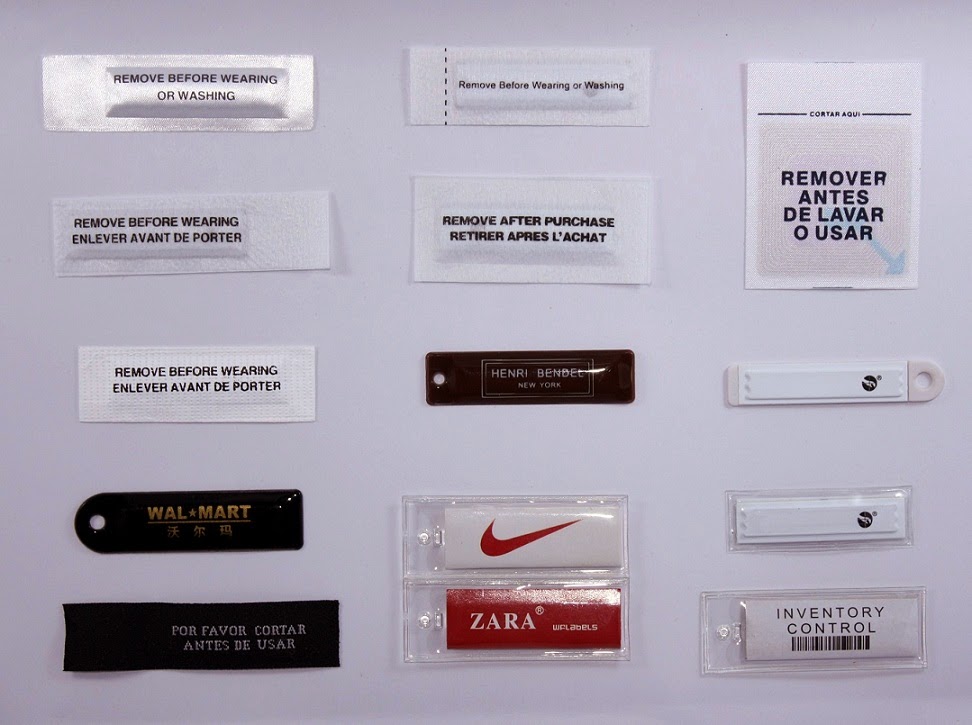

Types

There are several major types of electronic article surveillance systems:
  • Magnetic, also known as magneto-harmonic
  • Acousto-magnetic, also known as magnetostrictive
  • Radio frequency
  • Microwave
  • Video surveillance systems (to some extent)


Comment Please


Thursday, December 29, 2011

32/64 Channels Recording Package From SAMSUNG


32/64 Channels Recording Package

• Recording Software for Samsung Network Cameras
: Up to 64 Network Cameras recording
• Recording channel extension is available by channel addition kit.
• Live video monitoring and search/playback of recorded video by NET-i viewer software
• Supports various video and audio format recording
: H.264, MPEG4, MJPEG, G.711
• Supports various video resolution recording
: Mega Pixel (1.3M/2M/3M), D1, 4CIF, VGA, CIF
• Delivers high performance recording
: Up to 1,920fps(NTSC) / 1,600fps(PAL) recording at CIF resolution
• Triplex operation performance
: Recording, Live video transfer, Recorded video transfer
• Supports various recording options
: Continuous recording
: Event based recording (including Pre/Post alarm recording)
(Motion detection, I/V detection, Video loss, Alarm signal input)
: Scheduled recording (including Holiday setup)
• Notification in case of event occurring
: User defined alert sound output
: E-mail to pre-assigned receiver
: Notification to monitoring software (NET-i viewer)
• Event Log
: System, User Access, Backup, Recording, Motion, Alarm, Video loss, I/V
• Back up capability
: Manual Backup, Schedule Backup support
: Format - REC1 (playback by NET-i viewer), SEC (self playback and watermark)
: CD, DVD Backup
: External Storage (USB, NAS) Backup
• Multiple disk allocation and distribution for stable recording
• Multi-Level User access and authority management
• IP filtering function for security access
• Multiple Language user interface support
: English, French, Germany, Spanish, Italian, Russian, Chinese, Japanese, Korean
• Automatic search of network cameras for quick and easy configuration
• Easy camera management (IP change, configuration, firmware upgrade)
• Automatic self upgrade (Connection to Samsung upgrade server)

SAMSUNG Lounch New 32 Channel Premium DVR

32 Channel DVR


32 Channel Premium DVR with 960fps at half D1 resolution

The SVR-3200 provides 32 channels of high resolution real-time video recording capability at half D1 (704 x 240) resolution. The SVR-3200 allows the user to customize the recording setting to achieve real-time full D1 (704 x 480) resolution on selected channels. The SVR-3200 also comes with network monitoring software which allows the user to have remote access and control of the DVR over the network. The SVR-3200 is the perfect choice for medium to large businesses.

Features
• True real-time 960fps(N), 800fps(P) D1 high resolution live display
960fps(N), 800fps(P) half D1 resolution video recording
• MPEG-4 compression
• High resolution image [704 x 480, 704 x 240, 352 x 240(N)]
[704 x 576, 704 x 288, 352 x 288(P)]
• Simultaneous MPEG-4/JPEG streaming
• Capacity for up to 4 Internal SATA HDDs
• Two front panel USB ports for easy back up & mouse control
• DVD writer is included as standard feature
• ATM/POS transaction data recording and search
• Powerful CMS support as standard (SNM-128S/P)
• Convenient control with a remote controller and a mouse
• OSD (Multi-language)
• Thumbnail search / Calendar search / Book mark function
• 6 Multi-monitor
• Built-in web server
• RS-232C, RS-485/422
• Pan / Tilt / Zoom support (Multi-protocol)
• 16 Channels audio recording
Specification

RIL, Raytheon may form homeland security

RIL, Raytheon may form homeland security
Reliance Industries, India's most valued company, is in "advanced talks" with American defence giant Raytheon to create a joint venture that will pursue opportunities in homeland security in India and abroad.

"RIL and Raytheon are in talks (to set up a joint venture in homeland security business) that are in the late stage," said a person involved in the talks, asking not to be named.

A joint venture with Raytheon - maker of the famous Patriot missiles used in the first Iraq War and a strategic partner of the US government on key homeland security programmes - will give Reliance access to high-end security products and engineering solutions.

"This joint venture will give RIL the ability to innovate and develop key technologies for India," said a Delhi-based analyst who didn't wish to be identified because he is not authorised to speak to the media.

For Raytheon, which is present in the country through partnerships with several companies including the Tata Group, Larsen & Toubro and Bharat Electronics, the proposed venture will mean easier access to one of the fastest-growing markets for homeland security solutions.

The $8-billion Indian homeland security industry is expected to grow to $14 billion in the next three years and to $16 billion by 2016. Defence analysts say that such a joint venture could help end the so-called "India fatigue" that has set in among American companies after failing to make it to the shortlist of the country's biggest military contract, worth 42,000 crore, to acquire 126 medium multi-role combat aircraft for the Indian Air Force.

Responding to an email query from ET, a Raytheon spokesperson said, "We do not comment on rumour or speculation."

As of now, it has a joint venture with only one firm - France's Thales.

Reliance Industries' homeland security and aerospace division head Vivek Lall too did not respond to repeated e-mails about talks with Raytheon.

The Mukesh Ambani-owned company is also in talks with German firm Siemens AG to form a joint venture in homeland security, the person involved in the talks said. A few months ago, RIL had tied up with Siemens to jointly bid for security projects.

The two companies jointly bid for a 600-crore Mumbai CCTV project, which was conceived after the 26/11 attack and envisages setting up computerised video surveillance at 100 critical traffic junctions in the metropolis. The Maharashtra government has shortlisted the combine for the project.

Indian companies such as Tata Group, Larsen & Toubro and Mahindra Group have already tied up with foreign players in the homeland security space.

Mahindra Defence Systems has a joint-venture partnership with US-based Telephonics Corporation to make radars and surveillance and communication systems for the Indian military, while Tata Advanced Systems has a venture with Zurich-based AGT International to tap opportunities in the homeland security market. RIL set up its homeland security and aerospace division early this year after roping in Lall, 42, a former NASA scientist who steered Boeing's military and commercial division in India for years.

Lall worked with Raytheon in the 1990s and was part of the engineering team that developed its aircraft for the Joint Primary Aircraft Training System (JPATS), an ambitious aircraft procurement programme in the US in 1995.

Ever since the Indian Parliament was attacked in 2001, security experts have called for enlisting the private sector to step up security across the country, especially in cities.

Currently, one of the best "safe-city" communications systems in the country is in Parliament. Installed by Cassidian, the security division of the Netherlands-based EADS, the Tetra radio network doesn't get jammed even in disaster situations

Monday, December 26, 2011

New NIST Biometric Data Standard Adds DNA, Footmarks and Enhanced Fingerprint Descriptions

New NIST Biometric Data Standard Adds DNA, Footmarks and Enhanced Fingerprint Descriptions - 7th December, 2011

altThe National Institute of Standards and Technology (NIST) published a revised biometric standard in November, 2011, that vastly expands the type and amount of information that forensic scientists can share across their international networks to identify victims or solve crimes. Biometric data is a digital or analog representation of physical attributes that can be used to uniquely identify us.

The new standard is the Data Format for the Interchange of Fingerprint, Facial & Other Biometric Information and is referenced as "ANSI/NIST-ITL 1-2011, NIST Special Publication 500-290." Earlier versions have been used throughout the UnitedStates and six continents to provide a common language and format for the exchange of biometric data and associated metadata—information about the biometric characteristics or how it was collected. The Department of Defense, the Federal Bureau of Investigation, the Department of Homeland Security, the government of Argentina and others are already in the process of adopting the new standard.

"The additions to this version of the standard represent a great leap forward," said NIST Biometrics Standards Coordinator Brad Wing. The capabilities of the system have been greatly expanded from that of matching a fingerprint, facial image or iris sample collected directly from a live person and comparing it to samples previously stored in a database. New types of biometric data—DNA and plantars/footprints—were added as well as updates to existing record types.

This is the first international standard for the exchange of DNA data. DNA can be used for criminal case identification, such as in a rape case, or in a forensic setting to identify victims, such as those in a plane crash, where it is necessary to have an original DNA sample from the victim, or establish kinship by taking DNA samples from purported relatives. The standard handles both types of cases.

Another new addition is the Extended Feature Set (EFS) for forensic examiner markups that allow for marking and exchanging a very rich set of latent ridge print—fingerprints, palmprints and footprints—information that ensures analysts use the same terminology, references and procedures to describe details such as pores and linear discontinuities. Also new is the capability to share images of all body parts and anthropometric markups of face and iris images.

The standard now defines how to specify and share the geo-positioning coordinates of biometric sample collection. Information concerning the circumstances surrounding the collection of the biometric data can also be included. This includes pictures of items found around the crime scene and audio and video clips. Data handling logs show chain-of-custody of the biometric data for legal purposes, including the steps necessary to prepare the biometric sample for processing in a matching system.
NIST biometric research contributed heavily to the standard. In addition to part of the DNA work, the standard uses a NIST-developed compact format to exchange iris images,* and the Mobile ID Best Practice Recommendations.** (See the Nov. 3, 2009 NIST Tech Beat article, "NIST Test Proves 'The Eyes Have It' for ID Verification" at www.nist.gov/public_affairs/tech-beat/tb20091103.cfm#id, and the Aug. 25, 2009 article, "Who Are You? Mobile ID Devices Find Out Using NIST Guidelines" at www.nist.gov/public_affairs/tech-beat/tb20090825.cfm#mobile.)

Researchers already are at work on new additions to the standard, including voice biometrics, traumatic injury imaging and analysis (such as bitemarks), dental forensics (used to identify persons when DNA is not readily available, such as with skeletons) and conformance testing to the standard specifications.
NIST is involved with many standards development organizations (SDO), but the Information Technology Laboratory that produced this standard is NIST's only SDO, and is certified by the American National Standards Institute (ANSI). The standard is developed according to a consensus process and this update involved almost 70 voting organizations participating in 16 working groups over a two-year period

How to Use an Android device as Second Monitor for your PC or MAC

How to Use an Android device as Second Monitor for your PC or MAC!! 💠 The method is quite simple and easy and you just need to follow...